
Overview
Long before Baltistan became known to the outside world for K2 and its trekking routes, it was a cluster of small Balti kingdoms, each centered on a fortified palace and its ruling family. Two of the best-preserved survive today, a short drive apart from Skardu, and together they give a fuller picture of the region’s royal and religious history than either can alone.
Shigar Fort, known locally as Fong Khar (“Palace on the Rock”), belonged to the Amacha dynasty. Local tradition traces the family back to an earlier fort built in the 11th century after they fled persecution in Ganish, in the Hunza Valley; that original structure was later destroyed during a Mughal-era invasion, and the fort seen today was rebuilt in the 17th century on the same dramatic boulder outcrop. Nearby stands Amburiq Mosque, a centuries-old wooden structure whose carved woodwork is still cited as some of the finest traditional craftsmanship in Baltistan.
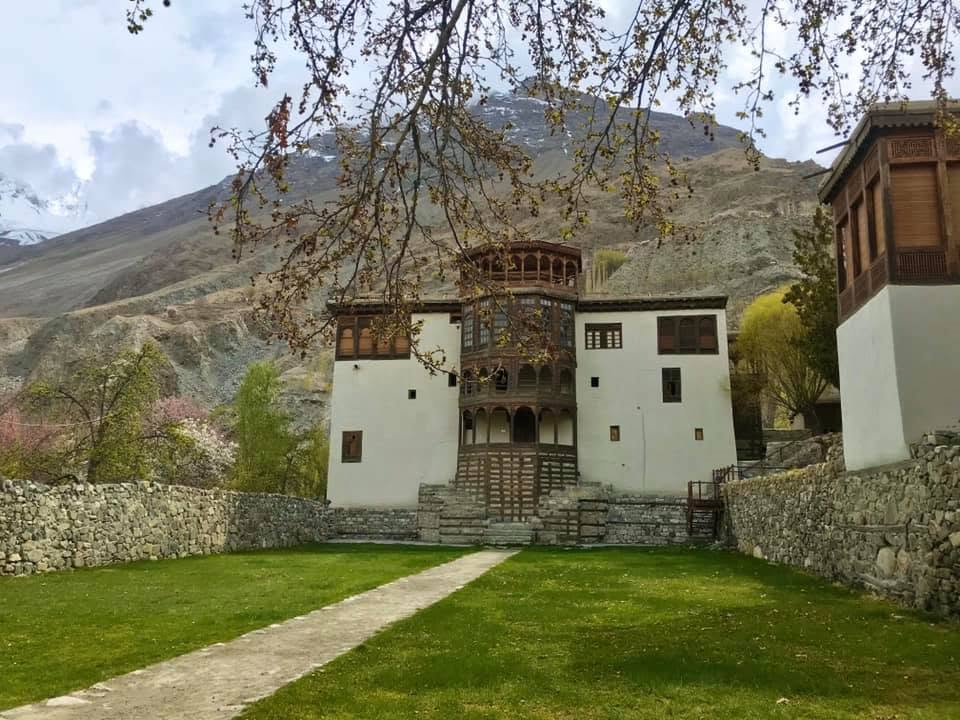
Khaplu, a few hours further east, holds two landmarks of its own. Chaqchan Mosque, meaning “The Miraculous Mosque,” dates to 1370 AD and is among the oldest mosques in the region — built, according to local tradition, by the Sufi missionary Mir Sayyid Ali Hamadani during the period when Baltistan’s population converted from Tibetan Buddhism to Islam. A short distance away, Khaplu Palace (locally, Yabgo Khar, “the fort on the roof”) was built in 1840 by Raja Daulat Ali Khan of the Yabgo dynasty, the family that ruled eastern Baltistan for generations. Both Shigar Fort and Khaplu Palace fell into disrepair over the 20th century before being carefully restored by the Aga Khan Trust for Culture — a years-long process completed in the early 2010s — and both now operate as heritage hotels and small museums under Serena Hotels, open to visitors even if you’re not staying overnight.
Trip Highlights
- Shigar Fort (Fong Khar), the restored 17th-century "Palace on the Rock" of the Amacha dynasty
- Amburiq Mosque, prized for its centuries-old traditional woodwork
- Chaqchan Mosque in Khaplu, one of the oldest mosques in the region at roughly 700 years old
- Khaplu Palace (Yabgo Khar), the 1840 royal residence of the Yabgo dynasty, now a heritage hotel and museum
- Aga Khan Trust for Culture restoration work, blending Tibetan, Kashmiri, Persian, and Mughal architectural styles
- Local Balti villages, craftsmanship, and cuisine along the route